At the age of 42, I’ve become somewhat of a connoisseur of spooky horses. I guess because I’m fairly even-keel on the exterior, I’ve often been paired with more nervous souls. When I was younger, I took all manner of spooking in stride. My first horse, Ahab, would jump to the side or full-on bolt to escape dangers on the trail or in the arena. At that age, I found the spooking an annoying inconvenience I had to put up with in order to go have fun with my horse and my friends. As I got older, spooking, or even the prospect of spooking, got a bit scarier. At this age, I don’t at all appreciate it, but it’s one of those things that all horse people have to entertain as a possibility when they ride.
Horses are prey animals, so their instinct is not to hang around and wait to see if something is going to eat them, their instinct is to sense the slightest danger and get out of there. For us poor humans, who do not have the same acute senses as the horse, this can absolutely come as a surprise to us, especially if the horse executes a dramatic spin, jump, or teleport across the arena. No matter how advanced the rider, they can be caught off guard in one of those moments and end up on the ground.
While they’re great at this “instincts” thing and the first one you want to tap for your team when it comes to a sport that needs you to “bolt first and ask questions later,” they are not great at assessing actual danger. That’s where they really need our human brains to lead the way. They need us to tell them, “It’s okay, it’s not a threat.” But in order to get them to listen to us there, they have to trust us.
How do you earn that trust, especially if you’re a beginner or just back in the saddle as a 40-something re-rider whose confidence has taken a hit (not speaking from personal experience or anything)? There’s lots you can do to set yourself up for success.
Start from the ground
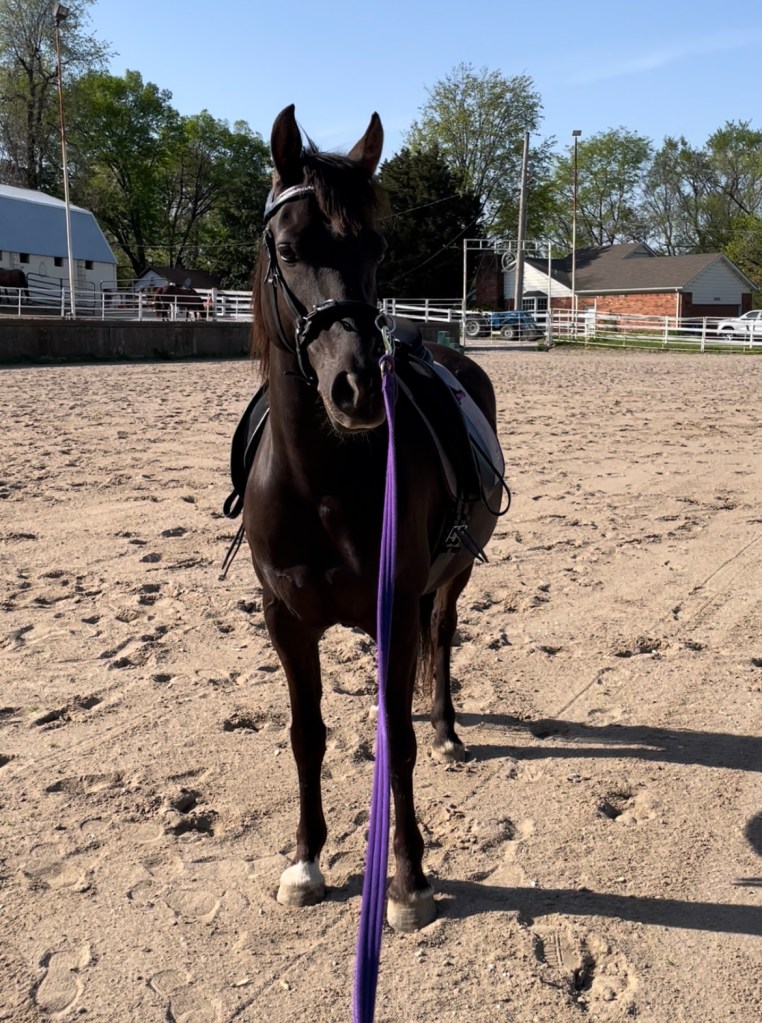
Great horse-rider relationships always start on the ground. This part involves a bit of acting on your part. We have to “fake it ’til we make it” when it comes to confidence. That means remembering to breathe deeply and moving with intention any time we are around the horse. So, mind your posture, keep your head up and looking ahead (not at your horse), your shoulders back, and stride forward like you’re on an epic journey. If your horse hesitates, encourage them forward with a lead rope or a whip and act like, “Hey, this is going to be fun, let’s go!”
You also want to make sure that your horse respects your personal bubble, so make sure they’re used to not standing on top of you when you are standing still with them on the end of the lead rope. If you look at horses that are lower in the herd pecking order approaching horses that are higher in the pecking order, they respect their personal space. The horse needs to move around you and stay in their own space, especially when they see something scary.
You may want to carry a dressage whip with you while on the ground to ensure that the personal distance is maintained. You don’t need to be aggressive with it, just a gentle tap can remind them that they need to hold their own space and stay away from you. If the horse does spook and they don’t respect your space, they can really hurt you.
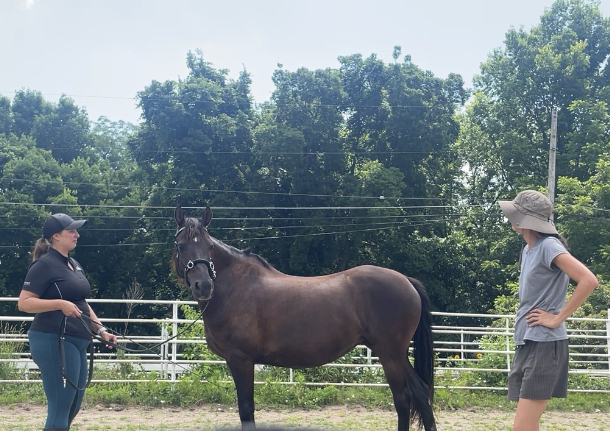
Once they do respect your boundaries and space, you can start working with them on approaching different obstacles or being in different environments on the ground. You don’t want to overwhelm them, but every once in a while, introduce them to something that is a bit out of their comfort zone, like a flapping tarp or a water bottle. Ideally, you can start at a distance or have a friend help, and then see where they become reactive, if at all. while you help them focus on walking around and staying with you. The goal is for them to see you as a leader and as the one they should look to in order to understand what is truly dangerous and what is not. Even if they react, you should not let it bother you. Stay calm and praise them for keeping their cool.
Have a mission
One of the big things I see with recreational riders is that they don’t have a plan in mind for their ride. They kind of meander around the arena, do some trotting, maybe a little canter, and whathaveyou. Leaving things open ended like that leaves a playground for the mind of a sensitive horse. Spooky horses are often very sensitive and smart, so, as such, you have to be one step ahead of them. That means that you start your ride with a mission in mind. Map out your ride. How many circles of walk will you do on each side before picking up the trot? What exercises will you do? You may not follow this plan to the letter, depending on how the horse feels that day, but you should always be thinking about the next steps ahead so that you don’t leave blank space for your horse to meander in their own head. If you have a mission, you will exude confidence to your horse. If the horse senses you know where you are going and what’s happening next, they will put more trust in you automatically.
Out of sight, out of mind
When you’re in the arena, you want your horse to be focusing on the task at hand, not on what’s going on outside of the arena or in the spooky corner of the indoor. Getting focus requires a combination of things. First, you should be doing something to get your horse’s attention: call their name, talk to them, and make sure the activity you’re doing is interesting and engaging. Also, make sure they have less of an opportunity to look around. Try to get them looking slightly to the inside of your circle and make sure you are also paying attention to your activity. You can’t expect the horse to focus if you’re looking around or daydreaming. If you struggle to get their attention, try dong some rapid direction changes, transitions, or backing up.
You also want to keep your sessions short and sweet. Sensitive horses don’t like to be drilled. Some learn to spook to “get out of” long, tedious sessions. They learn that if they act up, the rider will get off and the session will end – goody! So, keep the lessons fun, interesting, and stop in a good moment before things get too hard.
Recovering from a spook
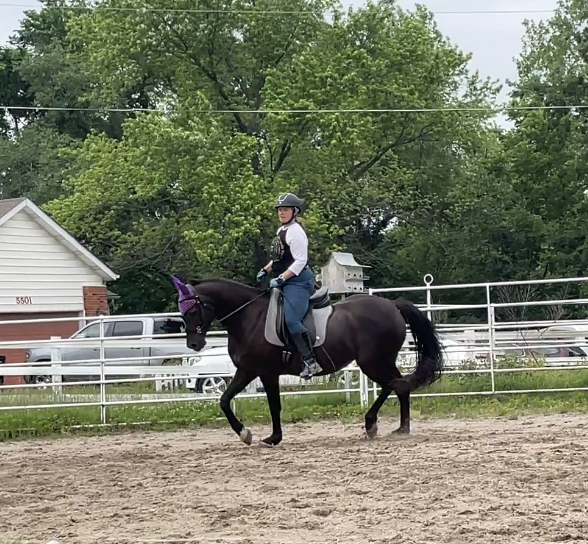
A big key to overcoming spooks is how you react to them after they happen. The less reactive you can be, the better. So, assuming the spook is a small one and you stay in the saddle, ride it out, get the horse back and calm, and then keep going back at doing what you were doing. The worst thing you can communicate is, “Oh, you were SO right to have bolted away from there! That waving tree was going to eat you!” Instead, if you go back to the scary place and go back to work, the horse receives the message, “It’s okay to have feelings, but really there is nothing to be afraid of over here.” Make it no big deal, just keep on keeping on.
Be smart
Ultimately, it’s your body on the line. If your horse is acting in a way that causes you to feel uncomfortable riding, don’t ride. There is no shame in getting off and continuing to work from the ground if you feel you don’t have control over a situation. Better that than to take big risks with your physical wellbeing.
And, finally, trust is built over time, so don’t get discouraged if your horse doesn’t automatically gravitate to you as a leader in every situation. With consistency and focusing on your intentions and desired outcomes for each session, you will gain more and more trust from your horse over time. But don’t forget, in order to get trust, you have to give trust, so trust your horse to come to the right decisions as you move forward. Hopefully that’s helpful to those of you dealing with a “Spooky-loo” as I like to call them (of course it’s something weird with me)!
 Equicurious