I used to work in a toxic job situation. No matter how long I worked, teams I motivated, mountains I moved, or innovations I introduced, the only times I got recognized were when something went wrong. Figuratively, I walked on eggshells. Physically, though, that manifested in frequently waking up with a painful, stiff, and immobile neck, the spasms sometimes shooting down into my shoulders and back. Talk about adding injury to insult. While I mostly grinned and bore the emotional pain of being shot down, scolded, or publicly humiliated at work, my body held the tension, anxiety, and suffering.
Humans are not alone in turning emotional strife into physical, and vice versa. For example, like me, a horse with a seemingly calm demeanor can harbor all sorts of tension in their body. A lot of the time, they hold onto it until they simply can’t any more. Sometimes this manifests in a trusted schoolmaster suddenly refusing jumps or running to the arena gate to escape. That’s why a lot of responsible trainers will insist on a physical checkup before any behavioral challenges are addressed.
Kiss has taught me a lot about the mind-body connection. As I worked with her at faster gaits on the lunge line and then under saddle, I realized how valuable it was to have a horse that was so communicative and demonstrative. A lot of people who don’t understand them call sensitive horses “crazy,” but really, they just want to be heard. And sensitive horses require a sensitive ear. If you don’t hear the small whispers of communication, you will quickly be faced with relative screams.
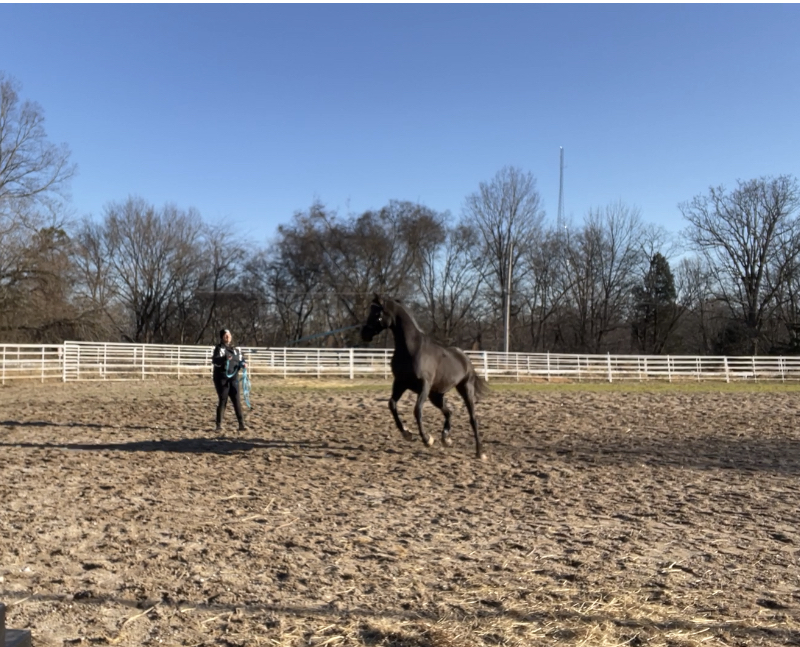
My sensitive horse can teach us humans a thing or two about boundaries. She does not like to feel trapped or forced and she does not like being off balance. Basically, she does not like feeling out of control of a situation with her body. I can relate, Sister. Any time I put pressure on too long or am not as generous with release on the cavesson, she reacts with a head toss or a yank away from me. Any time she is off balance on the lunge line or under saddle at the trot, she tenses up, tosses her head way up, and rushes forward.
To many horse people, this can be extremely frustrating. The best thing to do is to listen. And by listening, you communicate, “Oh, I hear you. Okay, we’ll release more frequently and faster this time.” And unfortunately, with balance, you have to work with both straightness and tempo, shifting the horse’s energy from the front to the back to help them build the right muscles to stay balanced. There isn’t really a way around that, but if you stay quiet, balance yourself, and give them as much freedom as you can so they don’t feel crowded or overwhelmed, they can learn to trust you. And trust is key.
You can’t communicate well with someone you don’t trust. And unfortunately, trust isn’t instantly won. It happens over time. So, you may deal with a certain situation with your sensitive horse, as I do mine, over and over, until they learn that you’re here to listen and they learn that you want to help, and they also start to develop the athleticism that helps them to overcome physical challenges.
In a “quick fix” world, this is not the answer most people want to hear. But gaining a horse’s trust is probably the most valuable relationship and training tool. If the horse trusts you, they will try more for you because they know you aren’t going to put them in a situation that is scary or horribly uncomfortable. They know that when they whisper, “I don’t like that,” that they will be heard.
Ultimately, every day that you are able to prove to your horse that you are listening to them is a win, even if that day doesn’t go quite as you have planned. And you’ll see that you’ll both be rewarded with calmer, more athletic bodies along the way.
 Equicurious