There are so many things in the traditional horse world that most riders accept as conventional wisdom but is actually, at best, not doing the horse any favors, and at worst can be harmful. For example, the flash noseband is rampantly used to keep a horse’s mouth shut, especially in the dressage world. Nevermind that in many cases, it can cause nerve damage to the sensitive tissue around the nose, and it also doesn’t address the core issue of why the horse is gaping its mouth open. The reason the horse is opening its mouth could vary across the spectrum: they could be stressed, they could be in pain or at least experiencing discomfort with the bit or within their jaw. However, conventional wisdom says we need to strap the horse’s mouth shut so it doesn’t look bad. Sometimes I look at the amount that horses put up with from people and think, “Wow, the fact that these animals haven’t killed more people is amazing.”
Let me be clear: flash nosebands are rampantly used. In fact, it’s a challenge to find a dressage bridle that doesn’t have one attached. And you can ask many a well-intentioned trainer about it and they would argue strongly that it doesn’t hurt the horse (I think in a lot of cases they’ve been surrounded by a culture that justifies it as well). And, okay, so what if it didn’t hurt the horse; you’re still not addressing the core issue, so does that make it the most ethical thing to do?
If you’ve been raised and a part of the culture of some disciplines, it can be a challenge to go against the grain. However, if enough people speak up about a practice and display the science that makes it problematic, it can make the practice less popular. And the less popular something is, the greater the chance that it will die out and that rules will change.
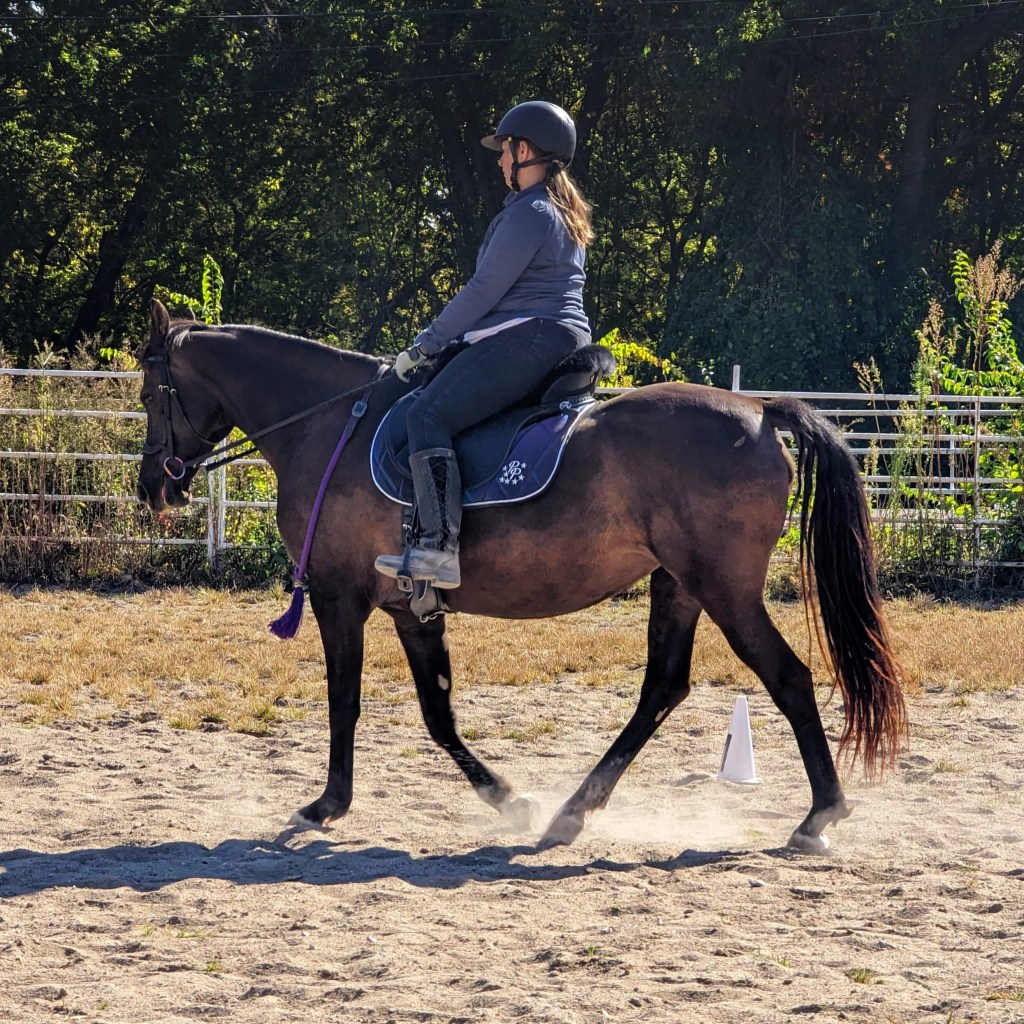
I’ve had to challenge a lot of my beliefs since I really got back into riding. Some of the things I grew up learning I later learned were problematic. For example, I learned, as many riders learn, to push the horse into the bridle, but then have a firm, elastic contact on the reins to create a rounded neck position. That looked fancy to me back then, like, wow, I’m really a sophisticated dressage rider with this springy, rounded horse. I thought the shape I was striving for with the horse was the epitome of the partnership between horse and rider, equitation at its finest. Little did I know that a horse that needs its rider to balance is not at the apex of training. If you watch some of the finest Spanish riders, their reins have a “smile” in them as they’re performing some of the most advanced moves. That’s because the horse is able to self carry. That is the apex of equitation.
I have a lot of pet peeves with a number of the norms we’ve created in the horse world that have persisted even in these modern times. And, certainly, I don’t know everything. The more we know, the better we can do, hopefully. I do hope to help shed some light on some of these issues as time goes forward. Every little bit helps.